Gold Coast Driveway Crossover (VXO) Permits: Concrete Specs & Compliance
Are you planning to construct a new concrete driveway or replace an existing one in Pimpama, Coomera, or Ormeau? If so, understanding the rules surrounding the vehicular crossover is essential. Any work extending beyond your property boundary onto public land requires specific approvals from the City of Gold Coast.
This comprehensive guide details the structural requirements for concrete slab construction, exposed aggregate colours, council crossover applications, and concrete driveway repairs to ensure your project complies with Queensland standards.
1. What is a Driveway Crossover (VXO)?
A driveway crossover (or vehicular crossing) is the section of the driveway that connects the road curb to your front property boundary, crossing over the footway or nature strip. Because this section sits on public land, it must withstand vehicular traffic without damaging underground council utilities (such as water mains and telecommunication lines).
⚠️ City of Gold Coast VXO Permits are Mandatory
Before any concrete is poured on the crossover section, you must obtain a Vehicular Crossing (VXO) Permit from the Gold Coast City Council. Pouring concrete on public land without a permit can result in heavy council fines and a directive to remove the structure at your own cost.
2. Concrete Specifications for Crossover Construction
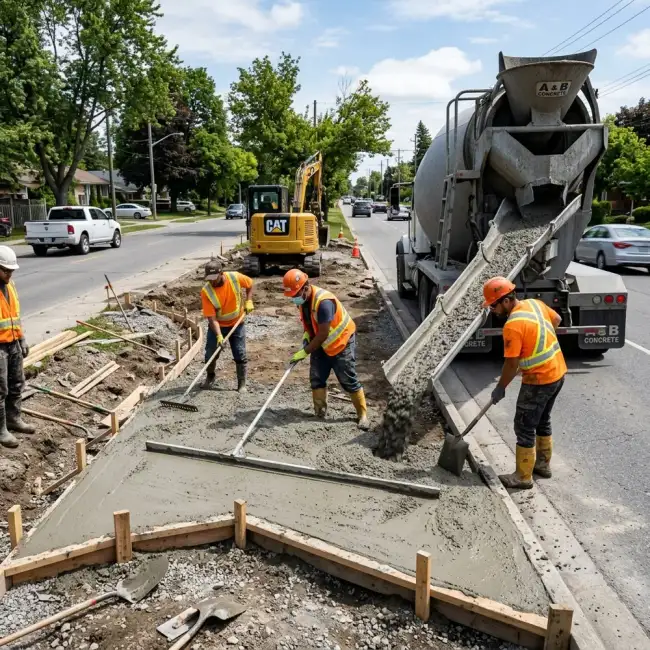
Unlike standard domestic pathways, driveway crossovers are subject to heavy vehicular loads (including delivery trucks and waste collection vehicles). The Gold Coast City Council enforces strict specifications based on Standard Drawings to prevent structural failure:
| Specification | Standard Residential Crossover | Heavy Industrial / Commercial |
|---|---|---|
| Concrete Strength | Minimum N28 (28MPa) or N32 (32MPa) | N32 (32MPa) or N40 (40MPa) |
| Slab Thickness | Minimum 125mm (over compacted base) | Minimum 150mm - 200mm |
| Steel Mesh Reinforcement | Premium SL82 Steel Mesh on chairs | SL82 or double layer reinforcement |
| Finish Surface | Non-slip heavy broom or exposed aggregate | Broom finish (transverse groove) |
Why Minimum Specifications Matter
Standard home pathways use N25 concrete strength with SL72 mesh at a 100mm thickness. However, if these specifications are applied to a crossover, the weight of vehicles crossing the curb will inevitably cause cracks. Using SL82 reinforcing steel mesh on mesh chairs and upgrading the concrete mix to N32 ensures the slab distributes vehicular weight evenly, protecting the structural integrity and avoiding premature concrete driveway repairs.
3. Exposed Aggregate: Pros, Cons, and Most Popular Colours
When selecting a finish for decorative concrete driveways, exposed aggregate concrete remains the premium choice across the Gold Coast. But what exactly is it, and what are its pros and cons?
What is Exposed Aggregate Concrete?
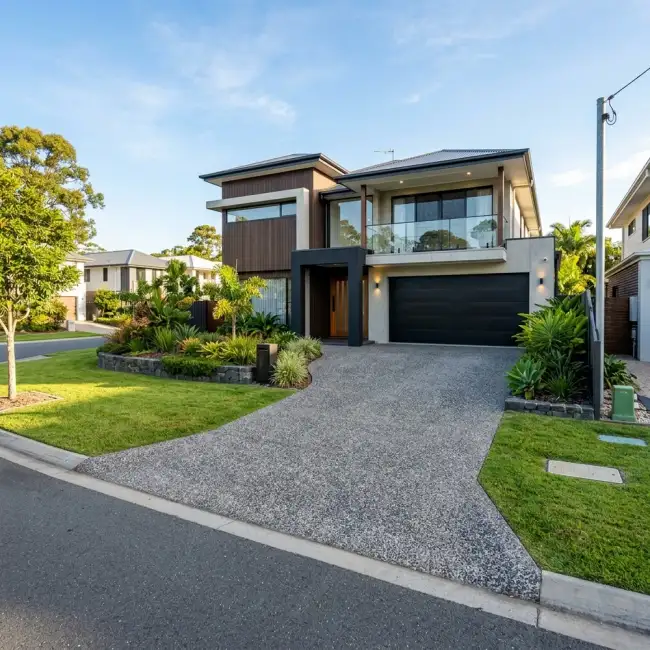
Exposed aggregate is created by mixing selected decorative pebbles, river stones, and granite into the concrete. Once the concrete is poured and screeded, a surface retardant is applied. The top layer of cement paste is then pressure-washed away to reveal the beautiful textured stones underneath, which are then locked in with high-durability acrylic sealers.
Disadvantages of Exposed Aggregate Concrete
- Higher Initial Cost: Typically costs $90–$140 per square metre compared to plain concrete.
- Maintenance: Needs to be re-sealed with UV-resistant acrylic sealer every 2–3 years to maintain its shine and protect it from oil stains.
- Rough Surface: Can be abrasive on bare feet, making it less suitable for play areas directly adjacent to children's play equipment.
Most Popular Exposed Aggregate Colours in Gold Coast
Choosing the right aggregate concrete colours can dramatically increase your home's curb appeal. The most popular exposed aggregate colour palettes in South East Queensland include:
- Charcoal Base with White Quartz: A stark, modern contrast that hides tyre marks and complements grey-toned modern brick homes.
- Tan/Cream Base with Gold Pebbles: A warm, beach-friendly palette that matches sandstone retaining walls and pool surrounds.
- Classic Salt & Pepper: A balanced mix of black basalt and white river pebbles on a light grey concrete base.
4. Concrete Driveway Resurfacing & Crack Repairs
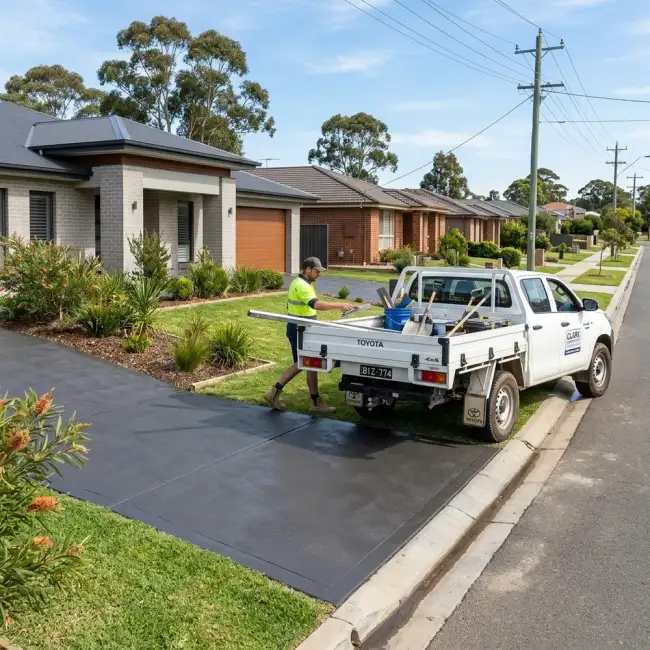
If you have an old, stained, or cracked driveway, you don't always need to excavate the entire slab. Concrete driveway resurfacing using Covercrete can completely restore the look of your driveway at a fraction of the cost.
Driveway Crack Repair
Before resurfacing, existing cracks must be repaired. Hairline cracks are cleaned, V-grooved, and filled with high-strength epoxy resin. For larger structural cracks, we install concrete expansion joint foam to control future concrete movement. Once the repairs are cured, the surface is ground smooth before the covercrete base coat is applied.
The Covercrete Resurfacing Process
Covercrete (or spray-on decorative concrete) involves spraying a polymer-modified cement compound over an existing cured slab. We apply custom stencil patterns (such as tile or brick borders) and finish it with premium covercrete colours, locked under double layers of UV-solvent sealers. This provides a slip-resistant, textured surface that looks brand new.
📞 Free Council Permits Assistance
Are you looking to install a new concrete crossover in Coomera, Pimpama, or Ormeau? We manage the entire council VXO drawing and permit application process for you. Contact us today for a free site inspection.
Frequently Asked Questions — Council Crossovers & Permits
Q: Do I need a permit for a driveway crossover on the Gold Coast?
A: Yes. Any section of your driveway extending from your property boundary across public council land to the street kerb requires a Vehicular Crossing (VXO) permit from the City of Gold Coast.
Q: Who manages the GCCC crossover permit drawings and inspection?
A: We manage the entire process for you — from submitting technical site drawings to scheduling council compliance inspections prior to pouring concrete.
Q: What concrete specifications are required for a Gold Coast crossover?
A: City of Gold Coast standards specify minimum 100mm–125mm concrete thickness, N32 strength concrete, SL82 steel mesh reinforcement, and approved expansion joints matching council invert profiles.